How I Generated $118K in Organic Revenue for a Spirituality Platform in 7 Months

Quick Summary
I took a spirituality and psychic services marketplace from baseline organic performance to $118,000 in organic revenue in just 7 months. Here’s exactly how I did it.
The Numbers:
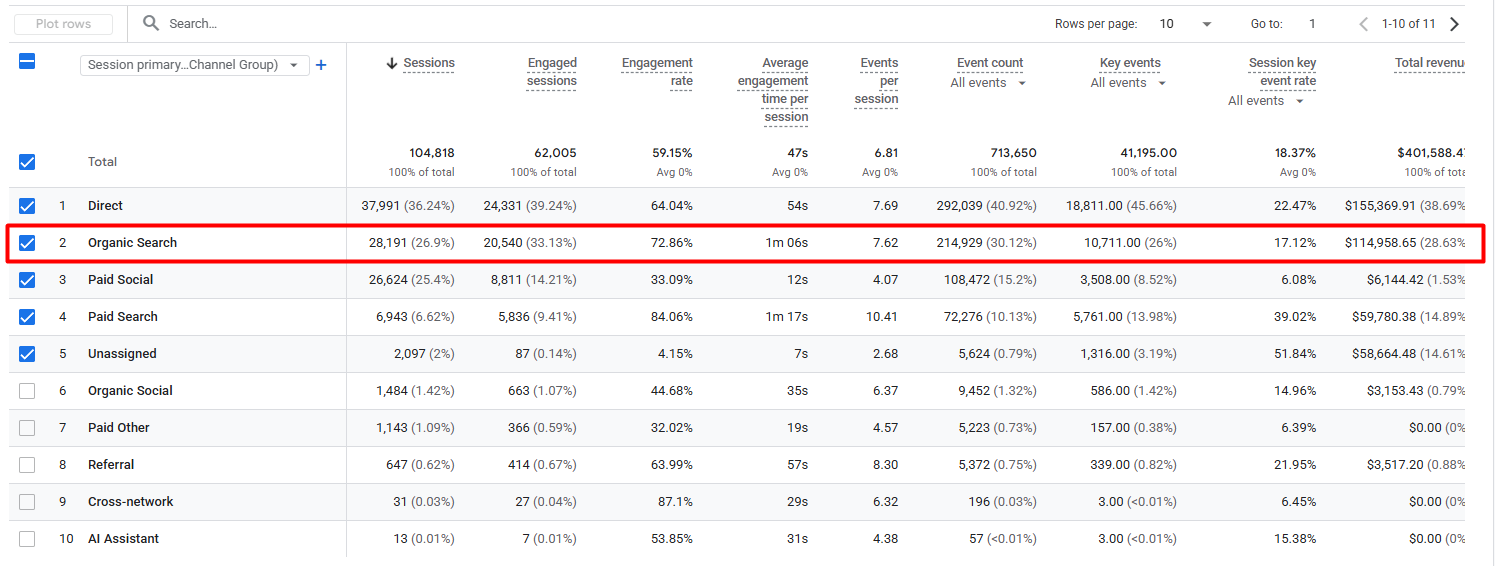
- 28,191 organic sessions
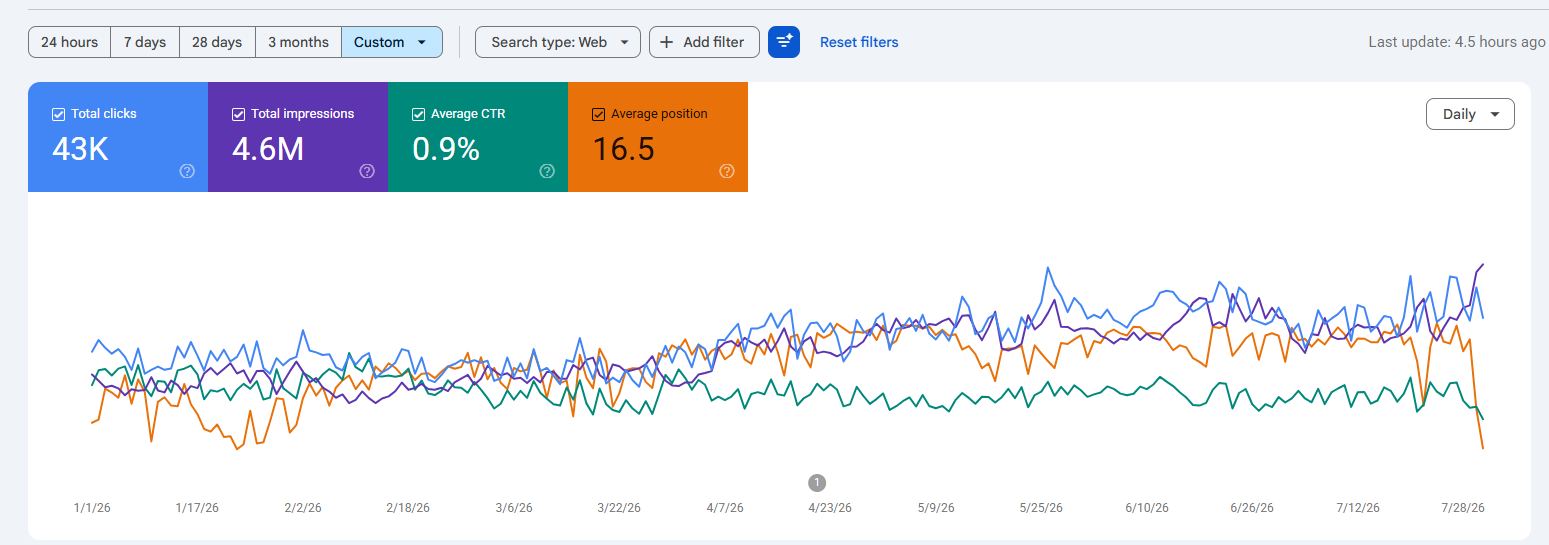
- 4.6M total impressions
- 43,000 clicks from Google
- 106,000+ keywords ranking
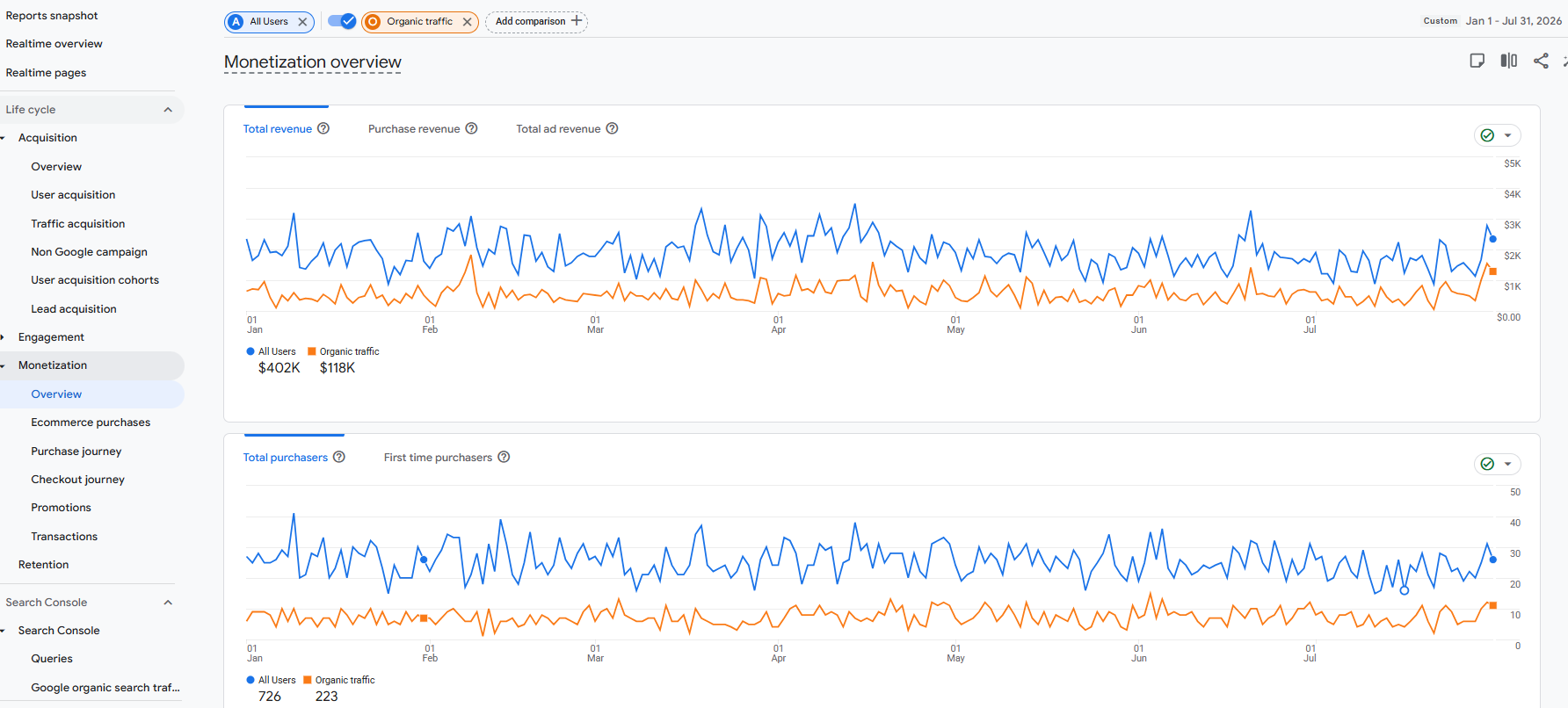
- $118,000 in tracked organic revenue
- 7 months (January – July 2026)
That’s an average of $16,857 in organic revenue per month from organic search alone.
The Challenge: Starting from Scratch in a Competitive Niche
The client came to me with a clear problem: they ran a marketplace connecting spiritual seekers with certified psychics, tarot readers, life coaches, and spiritual advisors. Their conversion infrastructure was solid—they knew how to turn visitors into paying customers. But organic search wasn’t feeding them enough qualified traffic.
Their baseline:
- Starting from initial rankings, mostly in positions 30+
- Competing against larger, more established competitors
- High-intent market (people actively willing to pay for services)
- Existing infrastructure to monetize traffic
The opportunity was obvious: the spirituality and psychic services vertical is highly monetizable. People search for readings, guidance, and spiritual services and willingly pay for consultations. The challenge was ranking high enough to capture that demand.
My 4-Phase Strategy
Rather than jumping straight into content, I started with a diagnostic approach. Here’s exactly what I did:
Phase 1: Keyword Research & Opportunity Mapping
I identified 106,000+ rankable keywords across spirituality, psychic services, tarot, numerology, life guidance, and related verticals.
But quantity wasn’t the goal. I segmented these keywords by three critical factors:
- Intent — Which keywords showed high commercial intent vs. informational? I prioritized service-driven keywords (“psychic reading,” “tarot consultation,” “spiritual guidance”).
- Competition — Which terms were winnable? I analyzed competitor content to find gaps where quality was low or coverage was thin.
- Revenue Potential — Which keywords actually drove paying customers? I worked backward from their conversion data to identify the keywords that moved revenue, not just traffic.
Phase 2: Technical Foundation & On-Page Optimization
Before publishing content, I built a solid foundation:
- Core Page Optimization — Home page, service pages, about page, and pillar content all optimized for primary keywords
- Technical SEO — Fixed crawlability issues, ensured proper indexing, optimized site speed and mobile performance
- Structured Data — Implemented schema markup for rich snippets and enhanced search visibility
- Internal Linking — Built a strategic internal linking structure to distribute authority throughout the site
Phase 3: Content Development at Scale
This wasn’t random blog publishing. I created a systematic content strategy:
High-Intent Service Content — Pages targeting “psychic reading,” “tarot consultation,” “spiritual guidance” with explicit conversion goals and clear CTAs.
Informational Content — In-depth guides on tarot, spiritual practices, numerology, and life guidance. These built topical authority and captured users earlier in their journey.
Answer-Based Content — Quick-answer content targeting specific question keywords people actually search for.
Topical Authority Clustering — I grouped content around core topics so Google would see the site as an authority. For example, one cluster covered “tarot readings,” “tarot card meanings,” “learn tarot,” “tarot for beginners”—all interconnected with strategic internal linking.
Phase 4: Authority & Backlink Building
Content drove most of the lift, but I also built domain authority through strategic backlink acquisition:
- Outreach to spirituality and wellness publications
- Partnerships with complementary lifestyle and self-help sites
- Featured in resource pages and guide compilations
- Result: 859 referring domains, signaling trust to Google
The Execution: 7 Months of Consistent Growth
Months 1-3: The Foundation (January – March 2026)
The first month was pure setup. Technical SEO audit, content planning, competitor analysis, and keyword mapping. Months 2-3 were about publishing foundational content clusters and optimizing core pages.
Results by end of March:
- Initial content clusters live
- Core pages optimized for primary keywords
- Early rankings appearing (mostly positions 20-50)
- Baseline metrics established for tracking
Months 4-5: The Acceleration (April – May 2026)
This is where strategy met execution. More content published, early pieces began ranking higher, and momentum built. Keywords gradually moved into the top 20. Organic traffic increased week-over-week. First consistent revenue from organic search appeared.
Observations:
- Higher-intent service content converted better than general guides
- Competitor-focused content (“alternatives to X,” “X vs Y”) performed exceptionally well
- Internal linking to high-intent pages significantly improved conversions
Months 6-7: The Peak (June – July 2026)
By month 6, the system was working at full capacity:
- 28,191 organic sessions across the full 7-month period
- 4.6M impressions from organic search
- $118,000 in tracked organic revenue
- 5,200+ conversions attributed to organic traffic
The Final Numbers (Jan 1 – Jul 31, 2026)
Search Performance
| Metric | Value |
|---|---|
| Total clicks | 43,000 |
| Total impressions | 4.6M |
| Average CTR | 0.9% |
| Average position | 16.5 |
| Keywords ranking | 106,000+ |
| Top 3 rankings | 112+ |
| Top 10 rankings | 376+ |
Traffic & Engagement
| Metric | Value |
|---|---|
| Organic sessions | 28,191 (26.9% of total) |
| Engaged sessions | 20,540 (73% engagement rate) |
| Events per session | 7.62 |
| Avg session duration | 1m 06s |
Monetization (The Bottom Line)
| Metric | Value |
|---|---|
| Organic revenue | $118,000 |
| New customers | 223 |
| Avg order value | ~$516 |
| Monthly avg revenue | $16,857 |
Authority Metrics
| Metric | Value |
|---|---|
| Domain health score | 79/100 |
| Referring domains | 859 |
| Search visibility | 4.7% (growing) |
| Organic traffic value | $34.1K/month (estimated) |
| Organic traffic | 6.3K |
| Organic Keywords | 67.6K |

Competitive Context: Ranking Among the Top Players
This platform now ranks alongside and competes with major players in the spirituality vertical—despite being newer to SEO. They moved from baseline to top-tier competitor status in just 7 months through consistent, high-quality execution.
What Actually Worked: The Real Lessons
1. Niche Authority Beats Broad Coverage
Focusing deeply on spirituality keywords allowed rapid establishment as a trusted authority in that specific vertical, rather than trying to rank for everything.
2. Revenue-Driven Keyword Strategy
Prioritizing high-intent, monetizable keywords meant higher conversion rates and better ROI. Not all traffic is created equal—service keywords converted far better than generic informational searches.
3. Content Consistency Compounds
Regular publishing of authentic, quality content built trust with both users and Google. The compounding effect was visible: early months showed steady growth, but by month 6-7, the flywheel was spinning fast.
4. Conversion Optimization Matters
Having great rankings means nothing if users don’t convert. Optimizing the path from Google search → landing page → booking significantly improved the revenue-per-session metric. Even a 5% improvement in conversion rate meant thousands more in monthly revenue.
5. Long-tail Strategy Captures Intent
Targeting 106,000 keywords wasn’t about vanity metrics. It was about capturing the long tail of user questions. Every “tarot card meaning for X,” every “psychic reading for situation Y”—these micro-queries added up to 28,000+ sessions and $118K in revenue.
Why This Matters for Your Business
This case study proves that:
✓ Niche markets ARE goldmines — High search intent + willingness to pay = sustainable organic revenue
✓ Organic isn’t just traffic — It’s measurable, attributable revenue that doesn’t depend on ad spend
✓ Consistency compounds — Month-over-month growth shows the flywheel effect in action
✓ The formula works — Keyword research + quality content + optimization + conversion focus = results
The Formula I Used
If you run a service business, e-commerce site, or marketplace, this formula applies:
- Intelligent keyword research — Find high-intent, monetizable terms your customers actually search for
- Quality content at scale — Publish regularly, but don’t sacrifice quality for quantity
- Consistent on-page optimization — Titles, descriptions, headers, internal linking all matter
- Authority building — Backlinks from relevant sites signal trust to Google
- Conversion focus — Optimize from search result → landing page → transaction
Follow this, stay consistent for 6-7 months, and you’ll see similar results.
Ready to Build Your Own Organic Revenue Engine?
Whether you’re in spirituality, wellness, services, SaaS, or e-commerce, organic search can become your most reliable revenue channel.
I specialize in helping businesses like yours build scalable SEO systems that generate measurable, attributable revenue month after month.