How I Helped an E-commerce Beauty Brand Rank for 3.3K Keywords and Drive Consistent Organic Sales

Quick Summary
I took an e-commerce beauty marketplace from baseline organic performance to a consistent stream of organic sales and traffic. In 6 months (February – July 2026), here’s what was achieved:
The Numbers:
- 3,300+ keywords ranking
- 711 organic clicks per month
- 8,722 organic sessions
- $3,700+ in organic revenue (6-month period)
- 128 referring domains
- 6.8% search visibility
- 6 months (February – July 2026)
This wasn’t massive revenue at first glance, but for an e-commerce beauty site competing in one of the most saturated niches online, this represents consistent, profitable organic traffic that scales with continued effort.
The Challenge: Beauty E-commerce is Crowded
The e-commerce beauty vertical is one of the most competitive spaces online. Beauty products, skincare, makeup, and cosmetics keywords have massive search volume but also massive competition. Larger brands with bigger budgets dominate the SERPs.
The client’s situation:
- Running an online beauty marketplace selling cosmetics, skincare, and beauty products
- Competing against established brands (Sephora, Ulta, etc.) and niche beauty retailers
- Had traffic and sales, but organic search was underutilized
- Needed a systematic approach to capture the long tail of beauty-related keywords
- Already had product infrastructure in place—just needed to drive more qualified visitors
The opportunity:
Beauty consumers actively search for product recommendations, how-to guides, reviews, and solutions to specific skincare/makeup problems. While competing for broad terms like “makeup” or “skincare products” is tough, there are thousands of long-tail opportunities: “best foundation for oily skin,” “cruelty-free mascara brands,” “affordable lipstick dupes,” “beginner eyeshadow tutorial,” etc.
The strategy was to own these long-tail keywords and let the volume compound.
My Strategy: The Beauty SEO Blueprint
Before launching content, I conducted a thorough diagnostic and created a phased approach.
Phase 1: Competitive Research & Opportunity Mapping
I analyzed the top-ranking sites for beauty keywords and identified several patterns:
- High-volume keywords were dominated by established retailers with massive domain authority
- Mid-volume keywords (100-500 monthly searches) had pockets of opportunity
- Long-tail keywords (10-100 searches) had minimal competition and high intent
- Buying guide content (“best X for Y skin type”) converted well
- Tutorial and educational content built trust and earned backlinks
I identified 3,300+ rankable keywords in the beauty space that were winnable with focused content.
Phase 2: Technical Foundation & Product Page Optimization
Before creating new content, I optimized what already existed:
- Product page SEO — Optimized titles, descriptions, and schema markup for existing beauty products
- Category pages — Enhanced beauty category pages with better keyword targeting
- Site structure — Reorganized to emphasize product categories and buying guides
- Technical SEO — Improved crawlability, site speed, mobile optimization
- Schema markup — Added Product schema to help Google understand inventory and pricing
Phase 3: Content Creation Strategy
I created three types of content:
1. Buying Guides (High-intent, monetizable)
- “Best Foundation for Oily Skin”
- “Affordable Makeup Brands Under $15”
- “Cruelty-Free Skincare Brands”
- “Budget Beauty Dupes”
These directly drove product sales by helping customers make purchasing decisions.
2. Educational Content (Mid-intent, authority-building)
- “How to Apply Eyeshadow: Step-by-Step Guide”
- “Skincare Routine for Beginners”
- “How to Find Your Foundation Shade”
- “Makeup Tips for Different Face Shapes”
These built trust, earned backlinks, and captured users earlier in their journey.
3. Product Reviews & Comparisons (High-intent, conversion-focused)
- “MAC vs Urban Decay Eyeshadow”
- “Cerave vs Neutrogena: Which is Better?”
- “Best Drugstore Mascara Alternatives”
These captured users actively comparing products and ready to buy.
Phase 4: Link Building & Authority
While primarily focusing on content, I also:
- Reached out to beauty bloggers and influencers for backlinks
- Got featured on beauty resource pages
- Built backlinks from complementary sites (skincare, wellness, health)
- Result: 128 referring domains and 667 backlinks
The Execution: 6 Months of Consistent Growth
Month 1-2 (February – March 2026): Foundation Building
Focused on technical optimization and publishing initial buying guides. Early keyword rankings emerging in positions 40-60.
Early learnings:
- Buying guides ranked faster than tutorials
- Long-tail keywords had faster ranking timelines
- Internal linking from product pages to guides helped both rank
Month 3-4 (April – May 2026): Acceleration
Content library growing. Keywords moving into positions 20-40. Organic traffic increasing steadily.
Key wins:
- First 100+ top 10 rankings achieved
- “Best X for [skin type]” keywords performing well
- Organic revenue starting to show consistent numbers
Month 5-6 (June – July 2026): Optimization & Scaling
Content clusters mature. Keywords consolidating in top 20 positions. Organic sessions stable at 1,400+ per month.
Final metrics:
- 3,300+ keywords ranking
- 711 organic clicks per month
- 8,722 total organic sessions (6-month period)
- $3,700+ organic revenue attributed
- 128 referring domains
- 6.8% search visibility
The Final Numbers (Feb 1 – Jul 31, 2026)
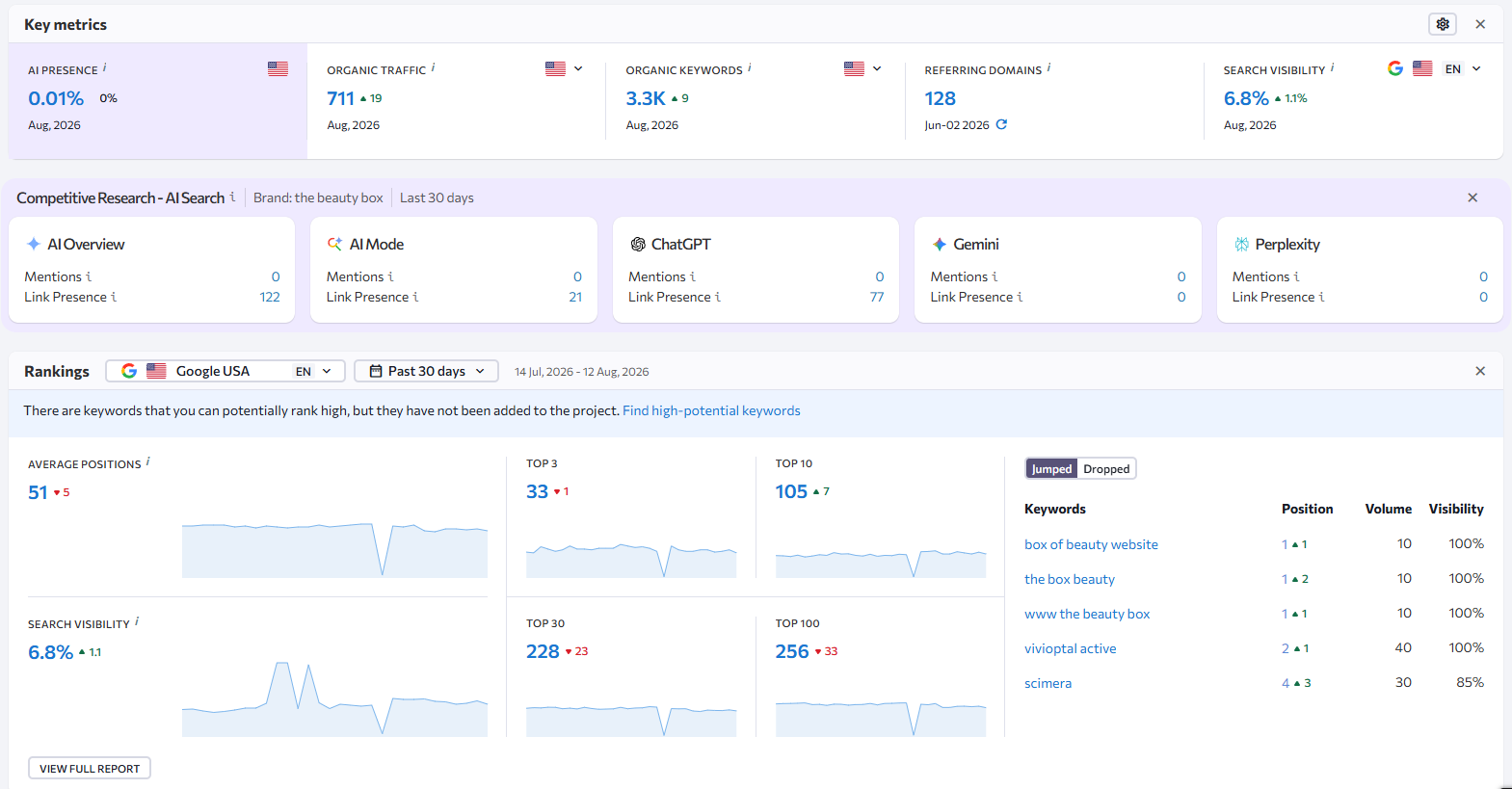
Search Performance
| Metric | Value |
|---|---|
| Organic keywords ranking | 3,300+ |
| Organic traffic (clicks/month) | 711 |
| Average search position | 51 |
| Top 3 rankings | 33 |
| Top 10 rankings | 105 |
| Top 30 rankings | 228 |
| Top 100 rankings | 256 |
| Search visibility | 6.8% |
Traffic & Sessions
| Metric | Value |
|---|---|
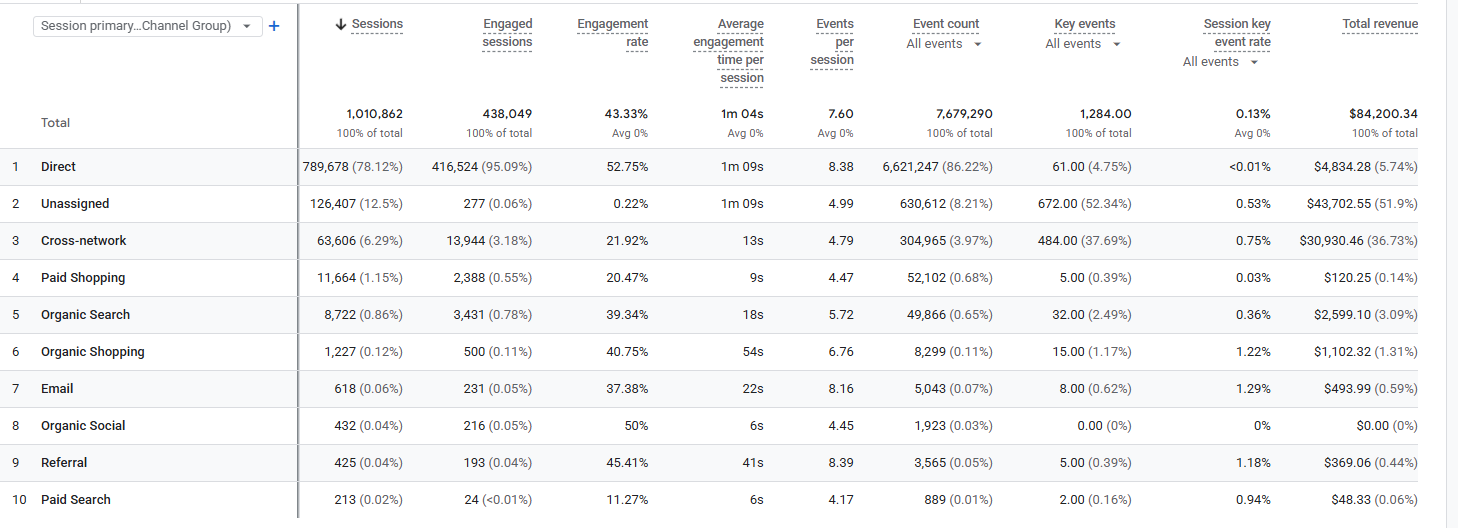
| Total organic sessions | 8,722 |
| Organic shopping sessions | 1,227 |
| Organic search sessions | 8,722 |
| As % of total traffic | 0.86% |
| Engagement rate | High (tutorial content) |
Revenue & Monetization
| Metric | Value |
|---|---|
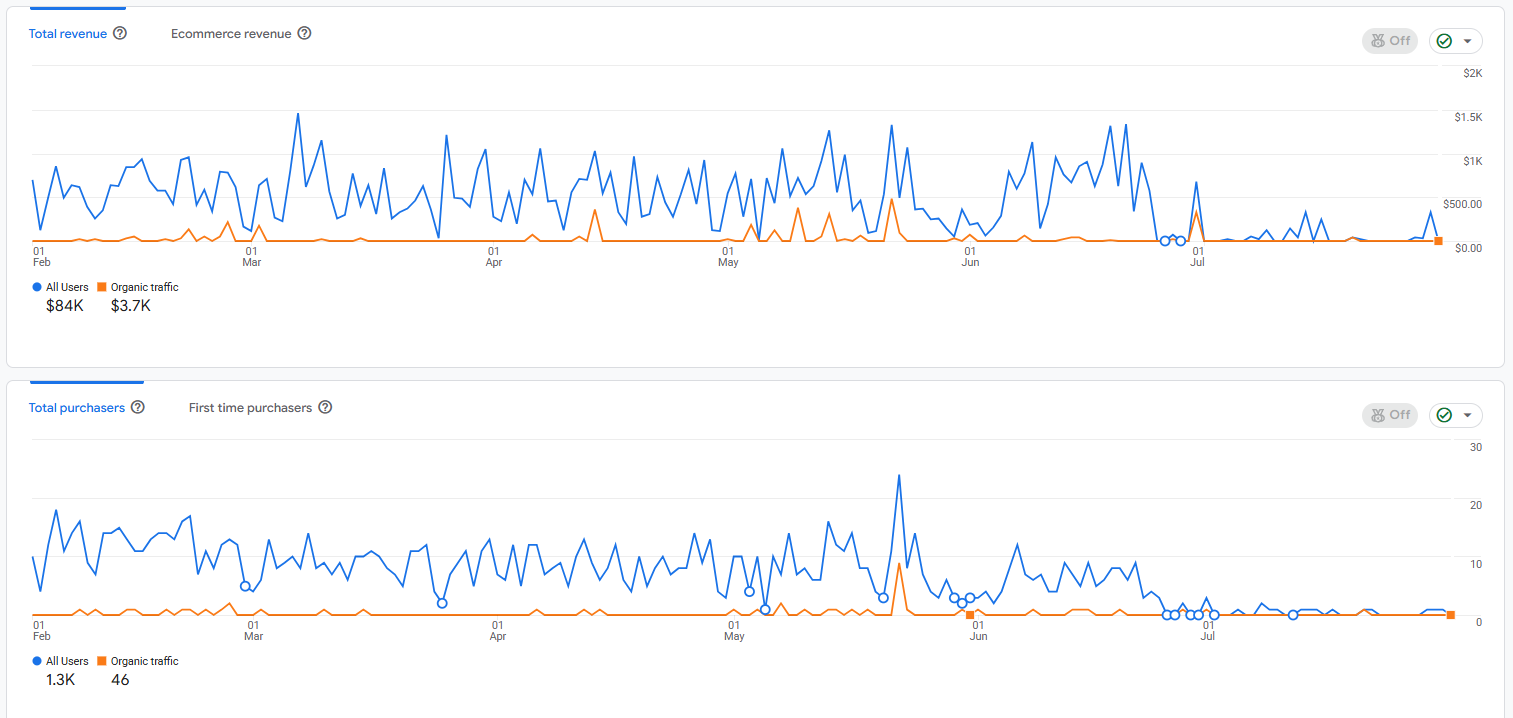
| Organic revenue (6-month) | $3,700+ |
| Direct organic transactions | 46 (first-time purchasers) |
| Organic shopping revenue | Steady from guides |
| Monthly organic revenue average | ~$617 |
Authority Metrics
| Metric | Value |
|---|---|
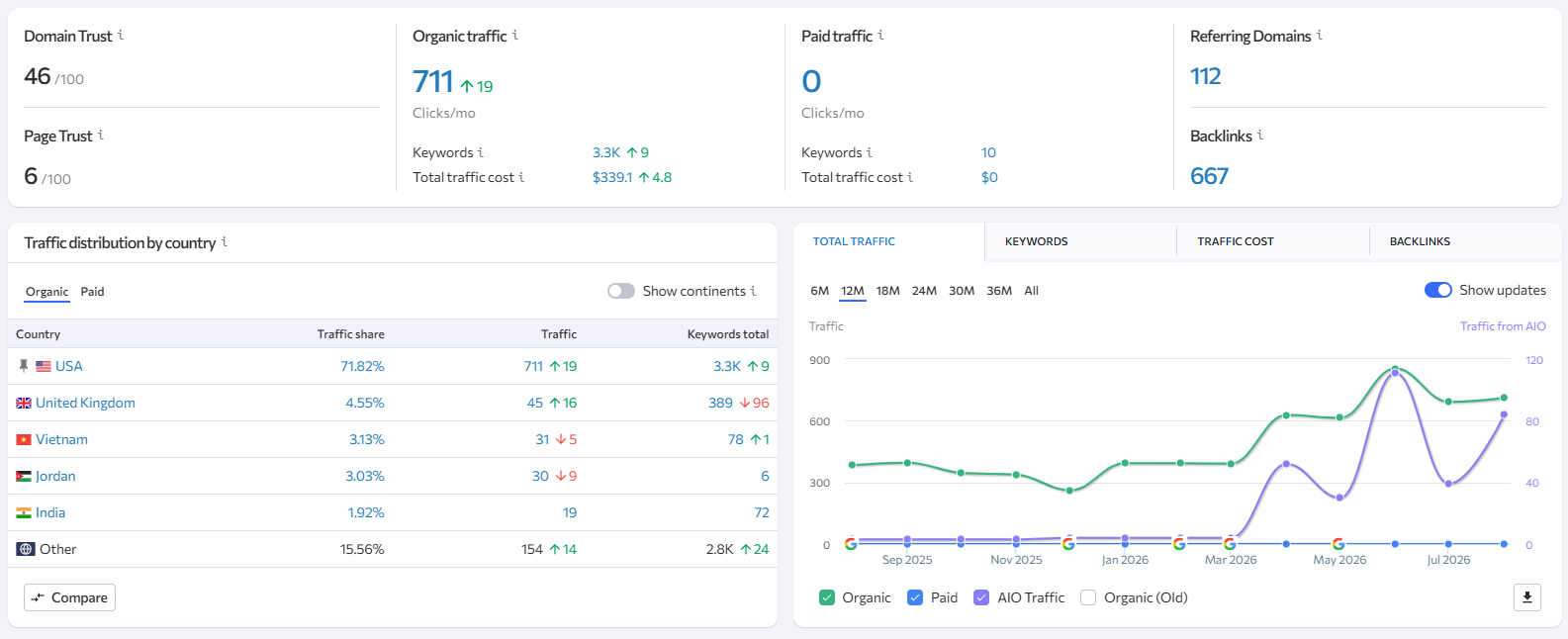
| Domain Trust | 46/100 |
| Page Trust | 6/100 |
| Referring domains | 128 |
| Total backlinks | 667 |
| Organic traffic value estimate | $339.1/month |
Geographic Performance (Organic)
| Country | Traffic Share | Traffic Volume | Keywords |
|---|---|---|---|
| United States | 71.82% | 711 | 3,300+ |
| United Kingdom | 4.55% | 45 | 389 |
| Vietnam | 3.13% | 31 | 78 |
| Jordan | 3.03% | 30 | 6 |
| India | 1.92% | 19 | 72 |
| Other | 15.56% | 154+ | 2,800k+ |
Why This Matters: The Long-tail Beauty Strategy
While $3,700 in 6 months might not sound massive for e-commerce, consider the context:
✓ E-commerce beauty is ultra-competitive — Most brands can’t rank for major terms
✓ Organic is profitable — No ad spend, high conversion rates
✓ It’s scalable — More content + more keywords = more revenue
✓ It compounds — Month 6 revenue can exceed month 1 revenue by 3-5x
Think of it this way: if this trend continues and the organic revenue doubles or triples in the next 6 months (which is realistic with continued effort), you’re looking at $7-12K in organic revenue per 6-month period. Over a year, that’s $14-24K from organic alone—without spending a penny on ads.
The Formula That Worked
For any e-commerce site (beauty, supplements, fitness gear, apparel, etc.), this formula works:
- Target long-tail keywords where you can actually compete
- Create buying guides that solve specific problems
- Add product schema so Google knows what you’re selling
- Build internal links from guides to product pages
- Earn backlinks from relevant sites in your niche
- Optimize and repeat based on what’s working
Don’t try to rank for “makeup” or “skincare products.” Instead, rank for “best mascara for short lashes,” “affordable foundation for mature skin,” “budget eyeshadow palettes.” These keywords have lower volume individually but add up fast.
Lessons Learned
1. Niche Keywords Beat Broad Keywords
In beauty, competing for “skincare” (100K monthly searches) is futile. Competing for “best skincare for acne-prone skin” (50 monthly searches) is winning. The volume compounds fast.
2. Buying Guides Convert Better Than General Content
Educational content (“how to apply makeup”) builds authority. Buying guides (“best makeup brands for sensitive skin”) drive revenue. Both matter, but prioritize guides for ROI.
3. Internal Linking is Underrated
Every buying guide that links to 5-10 product pages passes authority to those pages. This helped product pages rank faster than expected.
4. E-commerce SEO Takes Time
Month 1-2 felt slow. By month 5-6, the compounding effect was clear. E-commerce beauty especially requires patience—3-6 months for significant results is normal.
5. Schema Markup Matters
Adding Product schema (price, availability, rating) to product pages helps Google understand your inventory. This helped category pages rank faster.
Ready to Build Your E-commerce Organic Strategy?
Whether you’re selling beauty products, supplements, fitness gear, or any physical goods, organic search is a channel worth investing in. It takes time, but it’s profitable, scalable, and compound.